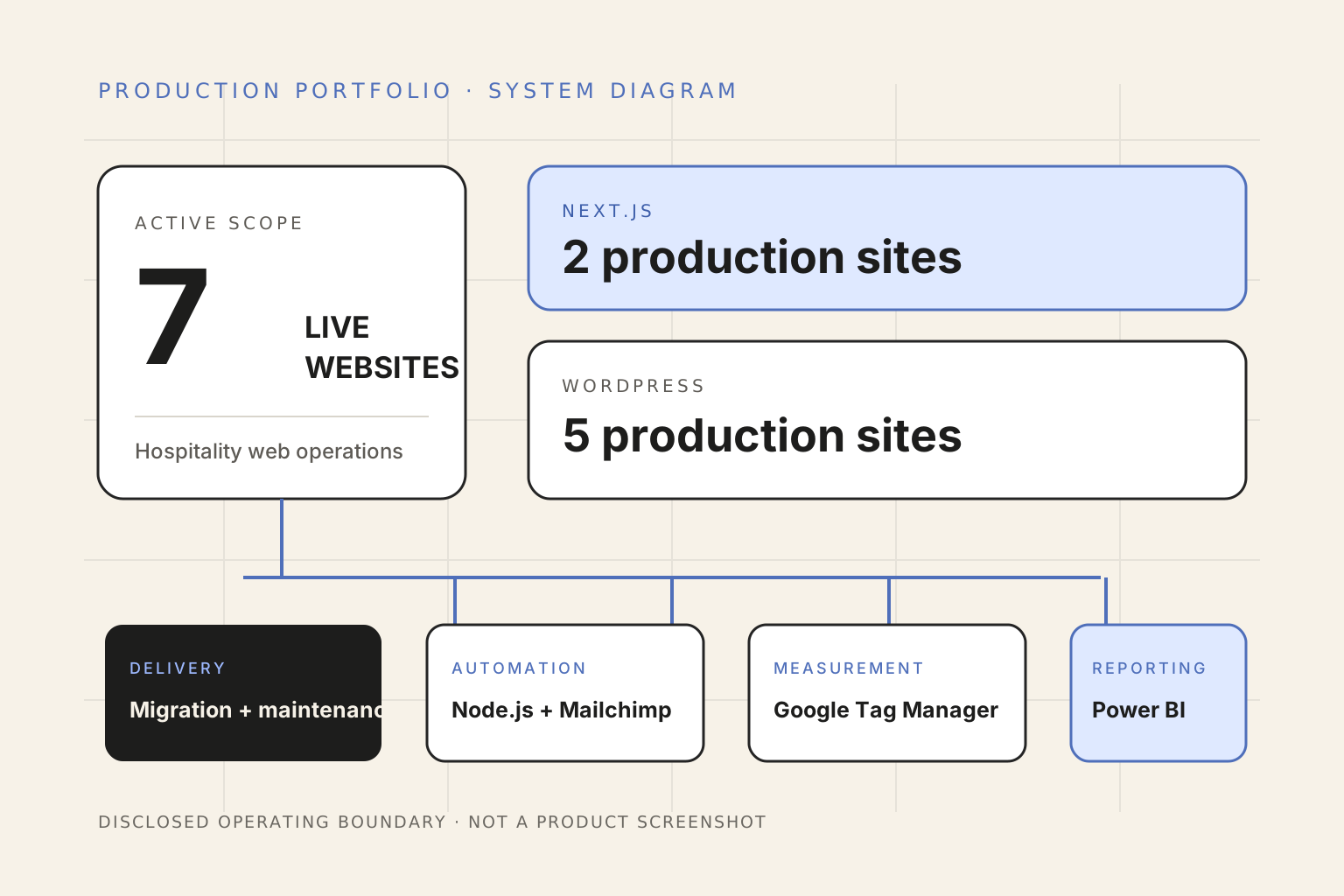
My current role covers the operation and modernization of seven production websites: two built with Next.js and five with WordPress. The work connects site delivery with migration, customer-action automation, analytics, and financial reporting.
Role
Web Developer
Timeline
2025 — present
Stack
Next.js · Node.js · WordPress · PostgreSQL
Type
Production web operations
7
production websites under active maintenance
2 / 5
Next.js and WordPress sites in the operating portfolio
Verification boundary
Evidence & access
Employer source code, private dashboards, and product screenshots are not presented. The case study is limited to verified responsibilities, public organization context, and diagrams of the disclosed system boundary.
Organization context
Pelican New Orleans publicly describes the hospitality organization and its operating brands. This link establishes employer context, not sole authorship of the site.Open reference(opens in a new tab)
Role receipt
The HTML résumé records the same role, dates, seven-site scope, migration, reporting, analytics, and automation responsibilities.View receipt
Measurement boundary
The results use verified operating scope. No traffic, revenue, conversion, SEO, or performance gain is estimated.
01
Context & problem
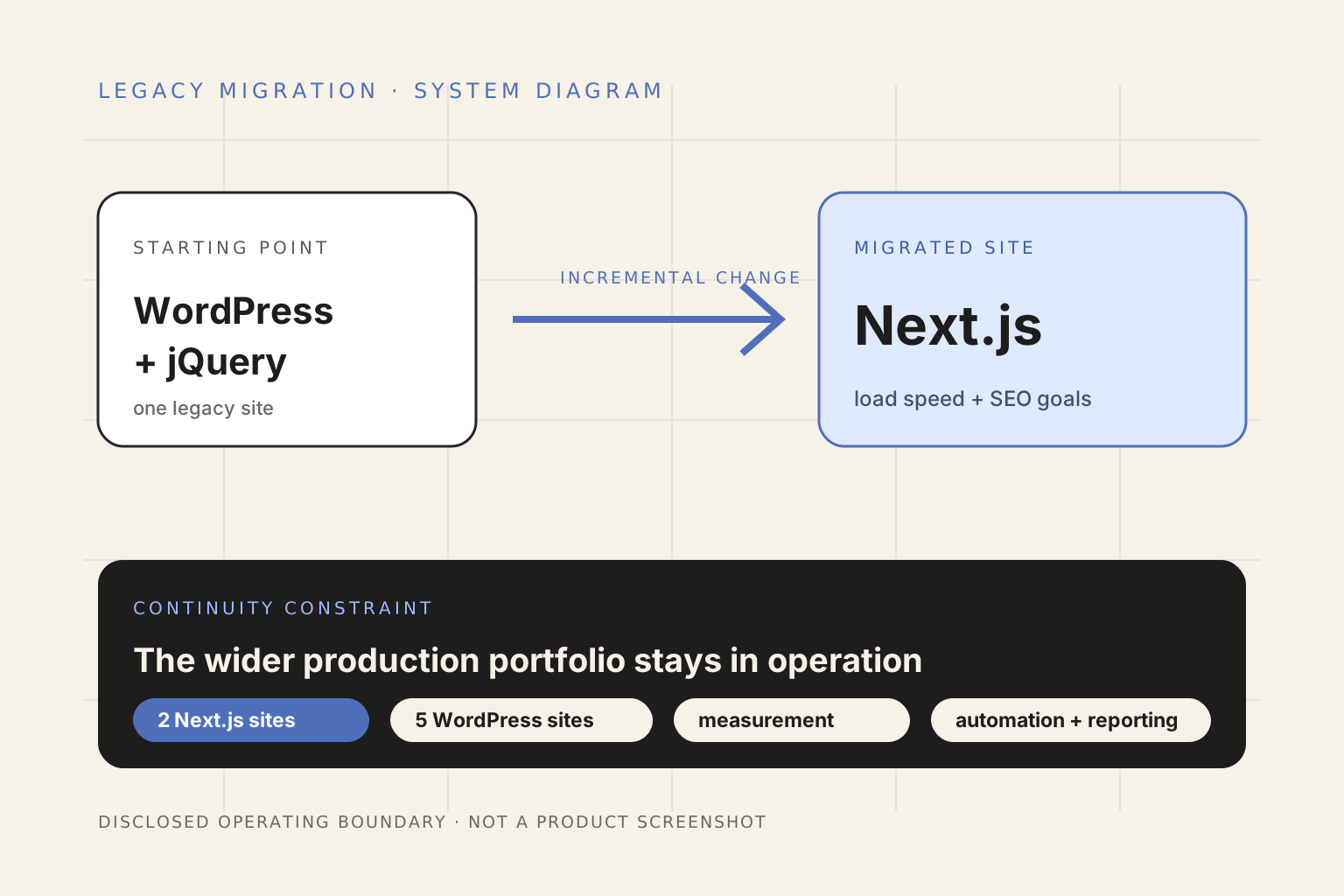
Pelican New Orleans operates a portfolio of hospitality websites rather than a single application. The engineering surface therefore includes two Next.js sites, five WordPress sites, a legacy WordPress and jQuery migration, customer-action services, analytics instrumentation, and reporting. The constraint is continuity: modernization work happens while the wider portfolio remains in production.
I owned
Maintenance across two Next.js and five WordPress websites
A legacy WordPress and jQuery migration to Next.js
Node.js services that trigger Mailchimp flows from customer actions
Power BI financial reports and Google Tag Manager instrumentation
Collaboration and feedback
This work belongs to an operating hospitality organization. The case study describes my documented engineering responsibilities and deliberately avoids assigning team structure or business outcomes that are not public.
02
Decisions & trade-offs
Modernize one legacy site while continuing to operate the mixed portfolio
Rationale
The role spans seven live sites. Moving the legacy WordPress and jQuery site to Next.js could improve that application without requiring a simultaneous rewrite of every property.
Trade-off
The portfolio retains multiple runtime and content-management models, so maintenance practices must continue to work across Next.js and WordPress.
Result
One legacy site moved to Next.js while active maintenance continued across two Next.js and five WordPress sites.
Treat measurement and reporting as part of website delivery
Rationale
Revenue, advertising spend, and client financial trends require data flows beyond page rendering alone.
Trade-off
Instrumentation and reporting introduce data-contract and validation work alongside interface delivery.
Result
Google Tag Manager tracks revenue and advertising spend, while automated Power BI reports surface client trends.
Connect customer actions to marketing flows through Node.js services
Rationale
A service boundary can translate application events into the appropriate Mailchimp workflow trigger.
Trade-off
The integration must keep application events and the external marketing platform as separate operational concerns.
Result
Node.js services trigger Mailchimp email marketing flows from customer actions.
03
Hardest challenge: changing one site while owning a mixed portfolio
Symptom. A migration introduces a new application model without removing responsibility for the other production sites. The operating surface still spans Next.js and WordPress while delivery, analytics, reporting, and marketing integrations continue.
Investigation & alternatives. The constraint rules out treating the migration as an isolated greenfield build. I separated the disclosed work into clear operating boundaries: site delivery, the legacy migration, customer-action services, measurement, and reporting. That framing makes the new Next.js application one part of the production portfolio rather than the whole system.
Verification & result. The verified result is operational scope: one legacy WordPress and jQuery site was migrated to Next.js, and maintenance continues across two Next.js and five WordPress sites. I do not publish performance or SEO gains without before-and-after measurements.
04
Quality & delivery
Production maintenance across Next.js and WordPress
Migration goals tied to load speed and SEO
Revenue and advertising instrumentation through Google Tag Manager
Automated financial reporting through Power BI
Customer-action automation through Node.js and Mailchimp
05
Outcome & reflection
The work joins application delivery with the systems that operate around it: a seven-site portfolio, an incremental legacy migration, customer-action automation, measurement, and reporting. The strongest verified outcome is sustained ownership across that mixed production surface.
What I’d change. I would capture a shared baseline before the next migration: Core Web Vitals, search visibility, build and deployment time, and a small set of operational failure signals. That would make the technical result as measurable as the portfolio scope.